Necessary != Right

If you have a subscription to the Atlantic, you can read this article, an eyewitness account of the bombing of Hiroshima by a survivor which was originally published in the August 1980 edition of the magazine.

To my horror, I found that the skin of my face had come off in the towel.

(What could I possibly mean by that title? Discuss.)

Posted by Johno Johno on   |   § 4

The Atom Bomb and a Better War

A couple military history items caught my eye over the last week.

The first is a book review by Mac Owens. In it, he examines two books by Richard Sorley - Vietnam Chronicles: The Abrams Tapes, 1968-1972 and a related, earlier book - A Better War: The Unexamined Victories and Final Tragedy of America's Last Years in Vietnam. The first book is transcriptions of audio tapes made while General Abrams was in command of American Forces in Vietnam, and is the raw material from which the second book was created.

A Better War makes the case that in the wake of the Tet Offensive and General Westmoreland's replacement, American forces were winning the war on the ground in Southeast Asia while it was being lost in Congress and at the peace talks.

Sorley's argument is controversial, but I find it persuasive. The fact is that most studies of the Vietnam war focus on the years up until 1968. Those studies that examine the period after the Tet offensive emphasize the diplomatic attempts to extricate the United States from the conflict, treating the military effort as nothing more than a holding action. But as William Colby observed in a review of Robert McNamara's memoir, In Retrospect, by limiting serious consideration of the military situation in Vietnam to the period before mid-1968, historians leave Americans with a record "similar to what we would know if histories of World War II stopped before Stalingrad, Operation Torch in North Africa and Guadalcanal in the Pacific."

Colby was right. To truly understand the Vietnam war, it is absolutely imperative to come to grips with the years after 1968. A new team was in place. General Abrams had succeeded General William Westmoreland as commander of the U.S. Military Assistance Command-Vietnam in June 1968, only months after the Tet offensive. He joined Ellsworth Bunker, who had assumed the post of ambassador to the Saigon government the previous spring. Colby, a career CIA officer, soon arrived to coordinate the pacification efforts.

Far from constituting a mere holding action, the approach the new American team followed constituted a positive strategy for ensuring the survival of South Vietnam. As Sorley wrote in A Better War, Bunker, Abrams, and Colby

brought different values to their tasks, operated from a different understanding of the nature of the war, and applied different measures of merit and different tactics. They employed diminishing resources in manpower, materiel, money, and time as they raced to render the South Vietnamese capable of defending themselves before the last American forces were withdrawn. They went about that task with sincerity, intelligence, decency, and absolute professionalism, and in the process they came very close to achieving the goal of a viable nation and a lasting peace.

The contrast between the two phases of the war are enormous. Max Boot, in The Savage Wars of Peace, also discusses how the American effort was finally beginning to work - thanks to new strategies like the Marines' CAP program for pacifying the rural south. Abrams, in the larger war, moved away from Westmoreland's ill-conceived large unit "sweep and clear" and "search and destroy tactics.

Abrams's approach focused not on the destruction of enemy forces per se but on protection of the South Vietnamese population by controlling key areas. He then concentrated on attacking the enemy's "logistics nose" (as opposed to a "logistics tail"). Since the North Vietnamese lacked heavy transport within South Vietnam, they had to pre-position supplies forward of their sanctuaries before launching an offensive. Americans were still involved in heavy fighting, as illustrated by two major actions in the A Shau Valley during the first half of 1969: the 9th Marine Regiment's Operation Dewey Canyon, and the 101st Airborne Division's epic battle for "Hamburger Hill." Most people don't realize that, in terms of U.S. casualties, 1969 was second only to 1968 as the most costly year. But now North Vietnamese offensive timetables were being disrupted by preemptive allied attacks, buying more time for Vietnamization.

...The 1972 Easter offensive [the first full scale invasion from the North] revealed the fruits of Abrams's efforts. This was the biggest offensive push of the war, greater in magnitude than either the Tet offensive [conducted by Viet Cong guerillas] or the final assault of 1975 [Another invasion from the North.] While the United States provided massive air and naval support, and there were inevitable failures on the part of some South Vietnamese units, all in all, the South Vietnamese fought well. Then, having blunted the Communist thrust, they recaptured territory that had been lost to Hanoi.

The terrible thing is that even as late as 1975, the Vietnam war could have been won. Had we lifted our heads from the Watergate scandal a little bit, and sent the military supplies and air support we promised, the South likely could have resisted the 1975 invasion. But short of ammunition and all other critical supplies, the South lost, and millions ended up refugees, or worse, sent into reeducation camps.

Another look at military history second guessing is Victor David Hanson's look at the atomic bomb sixty years after their only wartime use. There are some who still debate the utility of dropping the bomb. But the case is pretty clear that in that case, at least, the atom bomb was far preferable to the alternative.

The alternative to 300,000 killed in two atom bomb attacks is this:

  • At least that many, and almost certainly far more, civilians killed in any future bombing campaign prior to an invasion of the Japanese Home Islands. Curtis Le May had a nearby airbase in Okinawa, won at great cost just a month earlier. He had access to ever increasing numbers of B-29s, and would certainly have gotten access to whole fleets of B-17s, B-24s and other aircraft from the European theater. The fire bombing of Tokyo may have killed nearly a half million people. We didn't need nukes to annihilate cities, a part of accepted American strategy for over three years. Le May would have argued for laying waste to Japan by incindiaries.
  • The invasion of the small island of Okinawa cost 50,000 American casualties and 200,000 Japanese and Okinawa dead. Would the invasion of Kyushu and then Honshu have been easier? Conservative estimates of American casualties range upwards from a quarter million, and Japanese dead in the millions. (American casualties for the whole war were only about twice that number.) Japanese farmers were being issued spears. 10,000 kamikazes awaited the invasion fleet. It would have been the bloodiest campaign in history.
  • 10-15 million Chinese died in the war. Continued Japanese presence in China - and fighting there between the Japanese, Soviets and Americans would have resulted in hundreds of thousands more dead.
  • Something Hanson does not mention is the fact that as a result of the lethally effective American blockade (American submarines sank almost the entire merchant fleet of Japan in three years) and American disruption of transportation networks, the Home Islands were no more than a few months away from famine. A full scale invasion would have completely cut off the Japanese from other sources of supply, and progressively hindered what food distribution capability they retained. Some estimates suggest that a further 2-3 million Japanese might have died in 1946 from starvation even if we hadn't invaded, but merely maintained the blockades and bombing campaigns.

Not a pretty picture. War is often about terrible choices - and about taking the least bad option.

Posted by Buckethead Buckethead on   |   § 1

Death from above

Well, not really. Tomorrow morning, if you look to the Northeast before sunrise, you should be able to see the Perseid Meteor Shower. Sadly, the peak of the shower will happen during the day, so best viewing is Friday and Saturday morning before the sun comes up. Meteor counts in a dark sky should be on the order of 50-60 per hour.

There is very, very little chance that any of these will bean you on the head, since they are typically no bigger than a marble and have the consistency of cigar ash and burn up in the upper atmosphere.

Posted by Buckethead Buckethead on   |   § 4

Crackers with Beans

As of 9:30 am yesterday, Texas is a majority-minority state. The white overclass is now a minority in the very home of redneckdom. Texas follows California, New Mexico and Hawaii into this unnatural state of being. I'm sure that God is laughing that most of the states in greatest danger of falling prey to this syndrome are in the ex-Confederacy.

Crackers with Beans

I guess the only place that a self-respecting bigot can go is North Dakota, Iowa, West Virginia, Vermont, New Hampshire, or Maine.

Posted by Buckethead Buckethead on   |   § 11

Oops

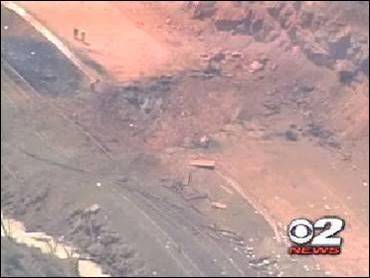
Note to self: if you're driving a semi filled with 35,000 pounds of explosives, don't flip the truck.

Oops

The explosion left a 60 foot wide crater in the road, and the truck was "pretty much vaporized."

Really?

Posted by Buckethead Buckethead on   |   § 1

This Week in Johno's Animadversion

“The first step in reforming government is also the first step of making chitlins: first you gotta squeeze out the dookie.”

That adorable little bit of folksy homespun wisdom was handed down to me by my Great-Grand-nuncle Hiram Boggs, a veteran of the Great War, and it was handed down to him by his Great-Grand-nuncle Zachariah Homer Muttonchop Boggs, who fought in the Civil War (on the side of the Blue) and spent his teenaged years fighting Copperheads and slave-hunters in the briar flats of Northeastern Ohio.

That makes seven generations of Boggses, Muttonchops, Mackies, Mackils, Morgans, Melvilles, Patricks, Picklebarrels, and Bagginses who have fought on the side of liberty against the encroaching depredations of the revenuer, the bully pulpit, and the bureaucrat.

And I’m starting to think it’s time for me to do the same. Of course, nobody in my family actually at any point picked up arms against the US Government (well, that’s not entirely true. I had a great-great-aunt killed by a stray bullet by Pinkerton men at Homestead and her husband was killed in a Pullman strike – also by the goddamn Pinkertons), and I don’t intend to either. That way lies madness and death.

But what can an honest man do when the fat cats down in Washington seem intent on Hoovering my wallet with one hand (that’s a pun, get it? Hoover the President and Hoover the vacuum cleaner? Haw!) and beating me about the head and neck with a Jack Chick tract (or a copy of The Noam Chomsky Reader) with the other? And what of an age where, even as our greatest enemies lie as they ever do outside our borders, even raising questions about the direction the country is taking elicits the inevitable “Don’t you know there’s a war on?!? Sinner!?!”

You know what an honest man can do?

Not a goddamn thing.

Posted by Johno Johno on   |   § 3

Thirty-Wonderful!

This is a public thank-you to the Buckethead Clan for the very generous (and thoughtful!!!) birfday present. However, Buckethead may wish to avoid contact with Mrs. Johno for a while: in her words, you are "so dead!"

Between that gift and the homebrewing kit I bought myself with the rest of my birthday loot, I'd say I'm going straight to hell. See you all there.

Posted by Johno Johno on   |   § 8

55 Words to Freedom

Loyal Reader #0016(EDog) is participating in a New Times Fiction Contest that restricts the writer to 55 words or less per story. 55 words from setup to punchline - that's tough, and the New Times' rules are fairly restritive as well; twenty-eight counts as two words, as does "screw'em." The best such stories will get published on real actual paper and sent to real actual readers who will read your words - on paper! Trust me when I say this is a delicious thrill orders of magnitude greater than blogging.

The Ministry hereby encourages all readers to consider participation. Your compliance is appreciated; indeed, it is expected.

Here is one of EDog's submissions for your entertainment and edification.

Straight Line, No Chaser by Ian Healy

It was the night Jeremy Stain played the Dove. She stood by the bar, looking available.

“I’m Stan,” I smiled.

“Ella.”

“Want to get out of here?”

“Can’t. Waiting for someone.”

“Buy you a drink?”

“Got one, thanks.”

I paused, considering my next move. “Want to make out in the girls’ bathroom?”

“Ok.” She grinned.

Posted by Johno Johno on   |   § 3

Is "Islands In the Stream" A Manifesto for Municipal Sewage Treatment Reform?

What really needs to be said about Dolly Parton? She is one of the few country artists to have completely transcended country music to become a legitimate superstar, and unlike latter day superstar crossovers like Garth Brooks, Parton has become a touchstone, an institution, worthy of enshrinement on the Mount Rushmore of country-music transcenders right next to Elvis, Johnny and Willie. They’d have a hard time holding up the boobs though. Some sort of flying buttress system, I suppose.

The Essential Dolly Parton (Sony Legacy, 2005) provides absolute proof that Parton is the whole package. I recently accused Marty Robbins of not having one of country’s great voices. Well, Dolly Parton does have one of the finest voices in country music, a bold and expressive soprano that can either whoop or quaver depending on the need. Few singers have the ability to sing a “white tone” (that is, without vibrato) if they have a strong natural vibrato. Parton, however, has total control over her entire considerable range.

And the songs. The songs! Nearly everything you need is here: “Joshua,” “Coat of Many Colors,” “Just Because I’m a Woman,” and even “9 to 5.” As Al Barger has noted in a previous review for blogcritics.org, even material that was considered at the time as not so good has aged remarkably well. Songs like “Here You Come Again” and even the execrable “Islands in the Stream” hold up better than you might remember, sitting comfortably alongside true greats like “Jolene” and “I Will Always Love You.”

That being said, some of the selections here are interesting more for their cultural baggage than for their intrinsic value. For example, “The Bargain Store” in which Dolly’s protagonist sings that she is damaged goods that gives quality service for cheap, over (by the way) a melody lifted from “Ghost Riders in the Sky,” harks back to the days of live radio shows. Radio revues from the 30s through the 50s were packed full of slightly chintzy, maudlin story songs just like this one, and that Parton wrote it in the first place gives us a clue as to where she first learned about music. Whether or not it is truly “essential” is an open question, but its inclusion does round all sides of Parton’s career.

The greatest drawback of this collection – if there is one – is that it leaves off most of Parton’s recent resurgence as a bluegrass singer. She has been recording for Sugar Hill records, and rather than pay a few dollars in licensing fees to do the job right, Sony includes just one song from these albums, substituting in their place second-tier offerings like the surpisingly weak “To Know Him Is to Love Him” from the Trio album with Emmylou Harris and Linda Rondstat. Worse yet, the included latter-day track is a cover of Collective Soul’s “Shine.” Although Parton does the song proud, that doesn’t change the fact that “Shine” is to begin with a crap song.

Blogcritics reviewer [url=http://blogcritics.org/archives/2005/06/29/024049.php]Al Barger probably has it right when he recommends that anyone interested in this collection should probably buy it, but also buy a Dolly/Porter Wagoner duet album and at least one of her more recent bluegrass offerings. The Essential Dolly Parton is a better-than-decent start to your collection, but some spotty track choices (especially on disc two) and two short discs means that there’s plenty more from Dolly Parton’s long and glorious career that can truly be rated essential.

Posted by Johno Johno on   |   § 0